


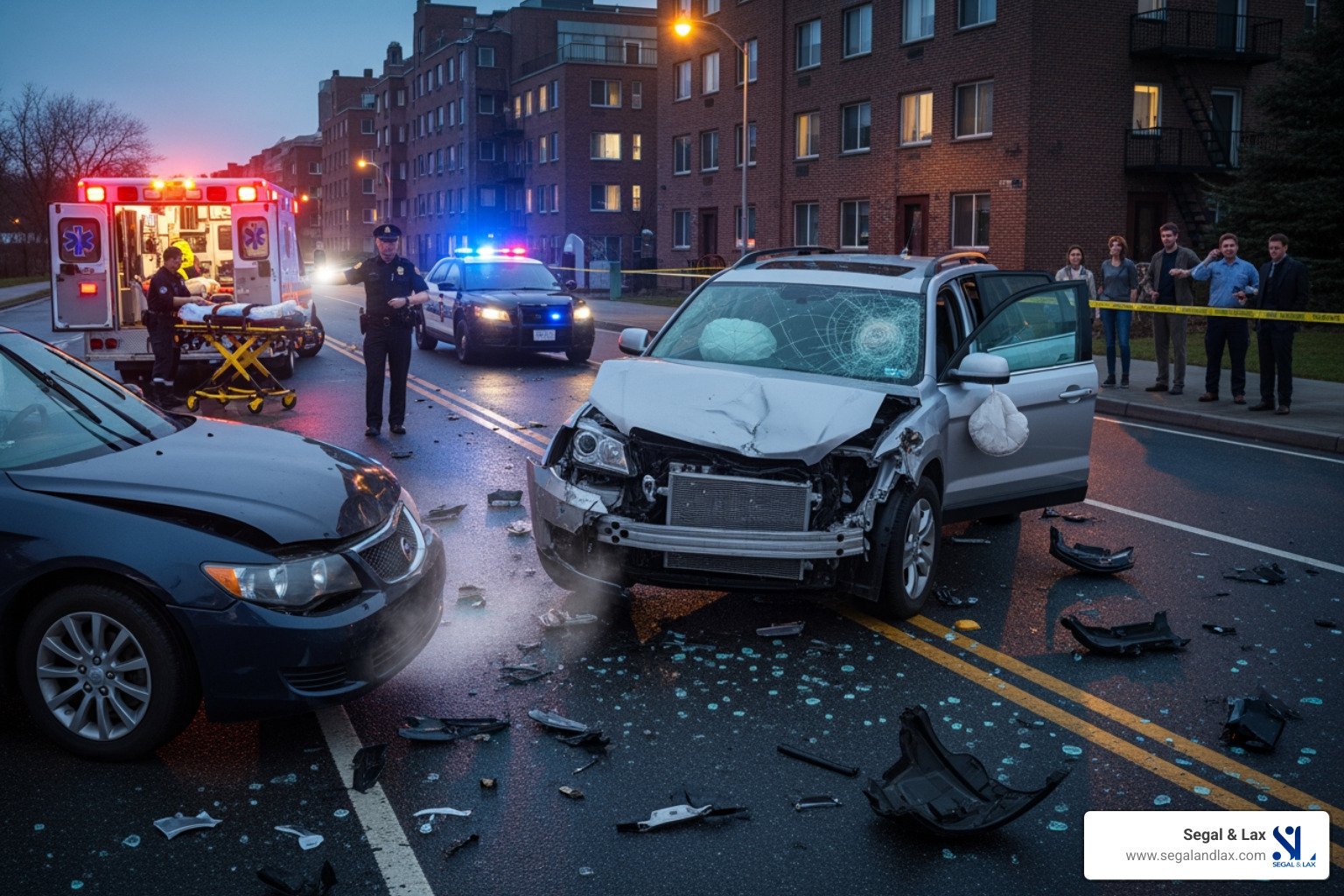
Staten Island car crash: Top 5 Deadly Factors
The Reality Behind Staten Island’s Rising Car Crash Toll
Staten Island car crash incidents continue to claim lives and injure hundreds of residents each year. If you’re seeking information about recent crashes or wondering what to do after an accident, here’s what you need to know:
Recent Fatal Crash:
- When: Early Sunday morning, approximately 4:19 a.m.
- Where: Staten Island Expressway near Victory Boulevard
- What Happened: Three men (ages 25, 26, and 27) died when their 2015 Chevrolet Cruze lost control, struck a barrier, and overturned
- Investigation Status: Preliminary reports suggest high speed may have been a factor; full cause under investigation
Key Staten Island Statistics:
- 229 car accident victims injured in August 2020 alone
- One person killed every two months in Richmond County
- $31.1 million spent annually on crash-related hospitalization and emergency care
- 120+ serious crashes on the Staten Island Expressway between 2020-2024
- Speeding cited in over half of these serious crashes
A devastating single-vehicle crash early Sunday morning has reignited community discussions about roadway safety on Staten Island. The tragedy reflects a broader pattern of preventable accidents throughout the borough, where driver inattention, excessive speed, and unique road conditions continue to contribute to fatal collisions.
The Staten Island Expressway has earned its reputation as one of the borough’s most dangerous corridors. Between 2020 and 2024, more than 120 serious crashes occurred along this stretch, with speeding cited as a leading factor in over half of them. Local officials and residents are now calling for stronger enforcement and infrastructure improvements—including speed cameras, better lighting, and expanded median barriers.
But the problem extends beyond one highway. Staten Island’s winding roads, bridge congestion, lack of sidewalks in many areas, and long commutes create a unique set of hazards that drivers face daily. In March 2017 alone, 393 motor vehicle collisions were reported, resulting in 144 injury or fatal incidents.
As Mark Segal, I’ve spent decades representing New Yorkers injured in Staten Island car crash cases, helping families steer the complex legal aftermath while holding negligent parties accountable. Throughout my career at Segal & Lax, I’ve seen how these collisions devastate lives and how critical it is for victims to understand their rights.
A Tragic Staten Island Car Crash Reminder: The Staten Island Expressway’s Deadly Toll
The recent fatal Staten Island car crash on the Staten Island Expressway serves as a heartbreaking reminder that even familiar roads can turn deadly in an instant. On an early Sunday morning around 4:19 a.m., three young men—aged 25, 26, and 27—lost their lives when their 2015 Chevrolet Cruze lost control near Victory Boulevard, struck a barrier, and overturned. While their identities haven’t been officially released as families are still being notified, the grief has already spread throughout the community.
The NYPD’s preliminary investigation suggests the driver may have been traveling at a high rate of speed before losing control. Investigators are carefully examining tire marks, vehicle debris, and other evidence to determine whether additional factors like impairment or mechanical failure contributed to the crash. These thorough investigations aren’t just about understanding what happened—they’re about preventing the next tragedy.
What makes this particularly troubling is that this Staten Island car crash isn’t an isolated incident. The Staten Island Expressway has become known as a high-injury corridor, one of the borough’s most dangerous stretches of road. According to NYC DOT Vision Zero data, between 2020 and 2024, more than 120 serious crashes occurred along the expressway. Speeding was cited as a leading factor in over half of these collisions.
The numbers paint a clear picture: this highway needs serious attention. That’s why community members and local officials are pushing hard for meaningful safety improvements. Among the proposed measures are speed cameras to catch drivers who treat the expressway like a racetrack, improved lighting to help drivers see hazards before it’s too late, and expanded median barriers to prevent vehicles from crossing into oncoming lanes.
These aren’t just theoretical solutions—they’re proven safety measures that save lives. Combined with stricter enforcement, these infrastructure changes represent vital steps toward making the Staten Island Expressway safer for the thousands of people who travel it every day. The question isn’t whether we can afford to make these improvements. It’s whether we can afford not to.
The Anatomy of a Staten Island Car Crash
While the Staten Island Expressway frequently makes headlines, Staten Island car crash incidents happen throughout the borough, touching lives in every neighborhood. The reality is sobering: motor vehicle accidents have historically ranked as the third leading cause of injury-related hospitalization and emergency room visits in Richmond County.
The human toll tells the story most powerfully. Every two months on average, three people lose their lives in car accidents here. During that same period, 92 victims require hospitalization, and 677 more seek emergency room treatment. Behind these numbers are families forever changed, careers interrupted, and lives upended.
The financial burden is equally staggering. Staten Island residents spend $31.1 million annually on hospitalization and emergency room visits related to car accidents. This doesn’t even account for rehabilitation costs, lost wages, or the immeasurable emotional toll these collisions exact on victims and their loved ones.
To understand the scope, consider just one month—March 2017—when 393 motor vehicle collisions occurred across the borough. These crashes involved 755 motorists, 60 passengers, 1 cyclist, and 38 pedestrians. Of these, 144 collisions resulted in injuries or fatalities, affecting 115 motorists, 60 passengers, 1 cyclist, and tragically claiming the life of 1 pedestrian while injuring 37 others.
What makes Staten Island’s roads particularly treacherous? Several unique factors set the borough apart from the rest of New York City. Those winding, tree-lined roads that give Staten Island its suburban charm also create blind curves and reduced visibility. The bridge traffic congestion—especially around the Verrazano-Narrows Bridge and other access points—creates frustrating stop-and-go conditions that test patience and increase rear-end collision risks.
Then there’s the reality of long commutes many Staten Islanders face. After navigating hours of traffic, driver fatigue sets in, slowing reaction times and impairing judgment at precisely the moments when sharp focus matters most. Add to this the wildlife encounters—particularly deer—that occur far more frequently here, creating sudden, unpredictable hazards. Finally, the lack of sidewalks in many residential and semi-rural areas forces pedestrians to walk dangerously close to moving traffic.
Understanding the Common Causes of a Staten Island Car Crash
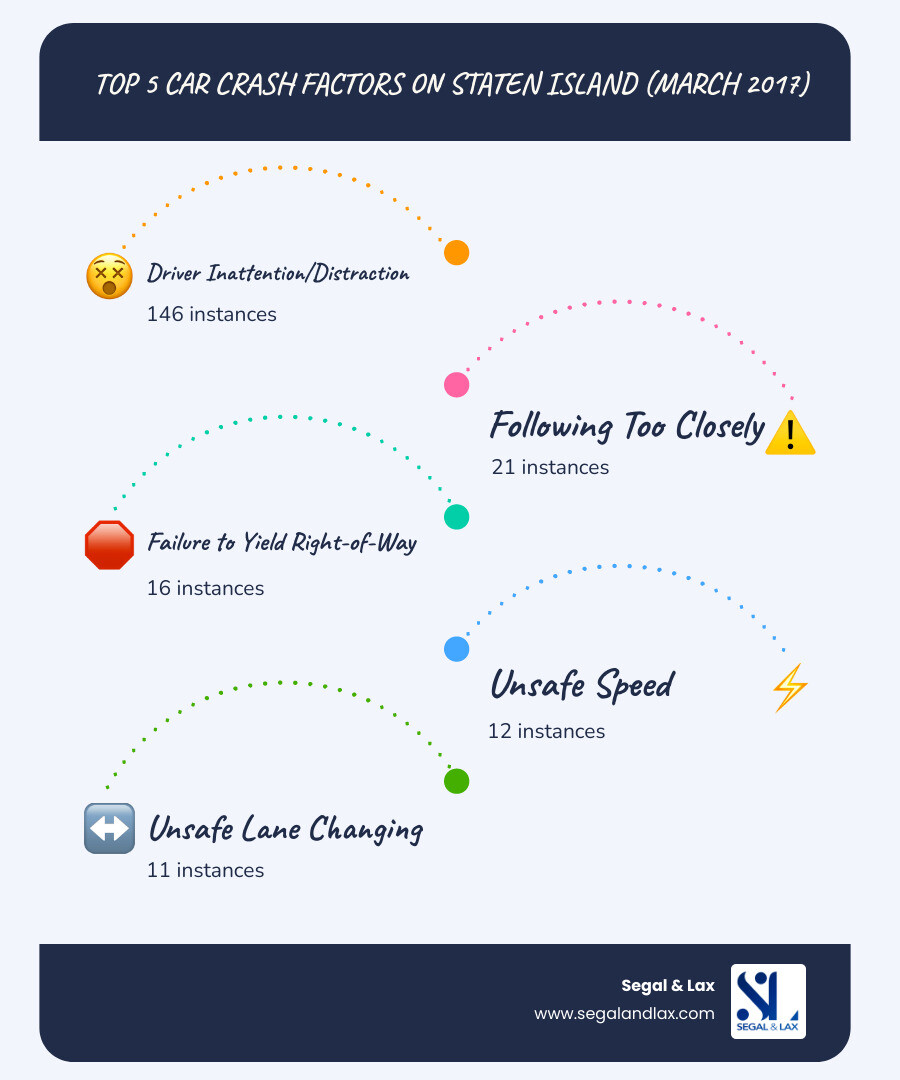
When we examine the data behind these collisions, certain patterns emerge with troubling consistency. The single biggest culprit? Driver inattention and distraction. In March 2017 alone, this factor appeared in 146 instances of injury and fatal collisions across Staten Island. That’s nearly one out of every six crashes that month. We’re talking about texting while driving, fiddling with the radio, chatting on the phone, or simply letting your mind wander when it should be focused on the road ahead. At Segal & Lax, we’ve handled countless cases involving Driver Distractions, and the consequences are often devastating.
Following too closely creates a domino effect waiting to happen. When you’re tailgating, you’ve eliminated the cushion of space that gives you time to react. This contributed to 21 injury or fatal crashes in March 2017, most of them preventable if drivers had simply maintained a safe distance.
Failure to yield right-of-way at intersections, during turns, or when merging led to 16 injury or fatal incidents that same month. These are the crashes that happen when someone thinks they can beat the light, squeeze into a gap, or turn without checking thoroughly. The resulting side-impact and head-on collisions can be catastrophic.
Unsafe speed continues to plague Staten Island’s roads. As we saw with the Staten Island Expressway statistics, speeding isn’t just about breaking the posted limit—it’s about driving too fast for conditions, whether that means rain, heavy traffic, or unfamiliar curves. This factor contributed to 12 injury or fatal collisions in March 2017.
Despite decades of awareness campaigns and stricter enforcement, Drunk Driving Accidents remain a persistent threat. Alcohol involvement appeared in 8 injury or fatal crashes during that March 2017 period. Each one of those crashes was entirely preventable.
The data also reveals that unsafe lane changing contributed to 11 injury or fatal collisions, while improper turning accounted for 10 such incidents. Aggressive driving and road rage—the impatient, reckless behaviors that include weaving through traffic and excessive lane changes—played a role in 3 injury or fatal crashes. Even traffic control disregarded (running red lights or stop signs) appeared in 7 injury or fatal incidents.
These contributing factors don’t exist in isolation. They often combine with Staten Island’s unique road characteristics to create truly dangerous situations.
Vehicle Types Frequently Involved in Collisions
The vehicles involved in Staten Island car crash incidents reflect how diverse our borough really is. According to March 2017 data, passenger vehicles topped the list with 358 collision instances—no surprise given they’re the most common vehicles on our roads. Right behind them, Sport Utility Vehicles (SUVs) and station wagons appeared in 243 collisions, reflecting Staten Islanders’ preference for larger vehicles that can handle suburban roads and family needs.
But personal vehicles tell only part of the story. Large commercial vehicles—including trucks with six or more tires, delivery vans, and pickup trucks—were involved in 32 instances. These vehicles steer residential streets daily, delivering packages and supplies, and their size and weight mean collisions involving them often result in more severe damage and injuries.
Buses play a vital role in Staten Island’s public transit system, but their large size and frequent stops contribute to accident risks. They appeared in 14 collision instances in March 2017, often involving smaller vehicles, pedestrians, or cyclists who misjudge their stopping distance or turning radius.
With the rise of ride-sharing services, taxis and for-hire vehicles have become a constant presence on Staten Island roads. These drivers often work long hours, increasing their exposure to accident risks. Motorcycles, while fewer in number, face heightened vulnerability due to their lack of protective structure—just 1 instance in March 2017, but each motorcycle crash carries a higher risk of serious injury or death. Even bicycles (2 instances) and ambulances (2 instances) found themselves involved in collisions that month, reminding us that no road user is immune to the dangers present on Staten Island’s streets.
Understanding which vehicles are most commonly involved helps paint a fuller picture of how accidents unfold and why certain collisions result in more severe outcomes than others.
After a Staten Island Car Crash: Immediate Steps and Common Injuries
The moments following a Staten Island car crash can feel overwhelming. Your heart is racing, your mind is spinning, and you might not be thinking clearly. But what you do in those first critical minutes can make a significant difference—not just for your safety, but also for protecting your legal rights down the road.
First and most important: stay at the scene. I know it’s tempting to just want to go home, especially if the damage seems minor, but leaving can lead to serious legal trouble. Even in a fender bender, you need to stick around until you’ve handled the necessary steps.
Call 911 right away if anyone is hurt or if there’s significant damage to the vehicles. The police will come, secure the area, and create an official accident report. While the NYPD doesn’t always generate reports for minor, non-injury collisions, getting one on record is incredibly valuable for your case. If it’s safe to do so, move your car to the shoulder and turn on your hazard lights to prevent another accident.
Next, exchange information with the other driver. You’ll need their name, phone number, insurance details, driver’s license number, and license plate. Give them your information too. If anyone saw what happened, ask for their contact information as well—witnesses can be crucial later on.
Now pull out your smartphone and start documenting everything. Take photos and videos of the vehicle damage from multiple angles, the road conditions, any traffic signs or signals, skid marks, the weather, and any visible injuries. The more you capture, the stronger your case will be. Think of your phone as your best evidence-gathering tool.
Here’s something many people don’t realize: you should see a doctor immediately, even if you feel perfectly fine. Adrenaline is powerful—it can mask pain and injuries that might not show up for hours or even days. Getting checked out right away creates a medical record that directly links your injuries to the accident, which is essential for any claim you might file. You can learn more about the crucial steps on our page After an Accident.
When you’re ready, contact an attorney who understands New York’s complex insurance laws. At Segal & Lax, we’ve guided countless Staten Islanders through this process, and we’re here to protect your rights from day one.
You’ll also need to get a copy of the official police report. For the first 30 days after the collision, you can request it at the precinct where the accident occurred. If the report was filed after September 30, 2016, you can also request it online through the Collision Report Retrieval Portal. After those first 30 days, you’ll need to request it from the New York State Department of Motor Vehicles using form MV-198C.
Recovering from a Staten Island Car Crash: Common Injuries
The human body simply wasn’t built to handle the violent forces of a car crash. In my years representing Staten Island families, I’ve seen how even “minor” accidents can lead to injuries that change lives. Understanding what you might be facing can help you get the right treatment and know what to expect during recovery.
Whiplash is probably the injury we see most often, especially after rear-end collisions. That sudden snap of your head forward and back can damage the soft tissues in your neck, leading to pain, stiffness, headaches, and dizziness that can last for weeks or months. Many people dismiss whiplash as “not serious,” but I’ve watched clients struggle with chronic pain for years.
Soft tissue injuries—damage to your muscles, ligaments, and tendons—might not show up on an X-ray, but they’re very real. Sprains, strains, and contusions can cause persistent pain and limit your mobility. Without proper treatment and physical therapy, these injuries can lead to long-term problems.
Broken bones are unfortunately common in car accidents. Whether it’s a fractured wrist from bracing against the dashboard, broken ribs from the seatbelt, or a shattered leg from the impact, these injuries often require surgery, casts, and months of rehabilitation before you can return to normal activities.
Head injuries are particularly concerning. Even a mild concussion can affect your memory, concentration, and mood. More severe traumatic brain injuries (TBI) can permanently alter cognitive function, personality, and quality of life. If you hit your head or feel dazed after an accident, get evaluated immediately—brain injuries can be subtle at first but devastating over time.
Spinal cord damage ranges from herniated discs that cause radiating pain down your legs to catastrophic injuries that result in paralysis. These injuries often require surgery and intensive rehabilitation, and some victims never fully recover their mobility.
Some injuries fall into the category of Catastrophic Injury—permanent disabilities, disfigurement, amputations, or severe burns that fundamentally change how you live your life. These cases require extensive medical care, home modifications, and often lifelong assistance with daily activities.
We also can’t overlook the emotional trauma that follows a serious crash. Post-traumatic stress disorder (PTSD), anxiety, depression, and a fear of driving are real and debilitating conditions. Many of our clients need therapy and counseling as much as they need physical treatment.
And in the most heartbreaking cases, accidents result in Wrongful Death. When a family loses someone they love because of another driver’s negligence, the grief is immeasurable. While no amount of money can bring back a loved one, pursuing a wrongful death claim can provide financial stability and a sense of justice during an impossible time.
Every injury deserves proper medical attention and documentation. Not only is this crucial for your health and recovery, but it also forms the foundation of any legal claim you might need to file.
Navigating the Legal Aftermath of a Staten Island Car Crash
Once the immediate shock of a Staten Island car crash subsides, you’re left facing a maze of insurance calls, medical bills, and legal questions. I’ve guided countless New Yorkers through this process, and I can tell you—understanding your rights from the start makes all the difference.
New York’s insurance system works differently than most other states, and it catches many accident victims off guard. We’re what’s called a “no-fault” state, which sounds confusing at first but is actually designed to get you help quickly. After an accident, your own insurance company pays for your initial medical expenses and lost wages through your Personal Injury Protection (PIP) coverage—regardless of who caused the crash. This typically covers up to $50,000 for medical bills, lost wages, and even death benefits if the worst happens.
Every driver in New York is required to carry certain minimum liability coverage as well. That means $25,000 for bodily injury to one person, $50,000 for bodily injury to multiple people, and $10,000 for property damage. There are also death benefit minimums of $50,000 for one person and $100,000 for multiple fatalities. These numbers might sound substantial, but in reality, serious injuries can quickly exceed these limits.
That’s where Uninsured Motorist Claims coverage becomes your safety net. New York requires drivers to carry this protection, which covers you if you’re hit by someone without insurance or if the other driver flees the scene. I’ve seen too many cases where this coverage was the only thing standing between a family and financial ruin.
Here’s something important to understand: while no-fault insurance covers your immediate expenses, it doesn’t compensate you for everything. If your injuries are serious—meaning they meet New York’s “serious injury threshold”—you can step outside the no-fault system and pursue a claim against the negligent driver for pain and suffering, permanent injury, and other damages that PIP doesn’t cover.
New York also follows what’s called “pure comparative negligence,” which is actually good news if you share some blame for the accident. Unlike other places where being even slightly at fault can destroy your case, here in New York you can still recover compensation even if you were partially responsible. Your award just gets reduced by your percentage of fault. So if a jury awards you $100,000 but finds you were 20% at fault, you’d receive $80,000. Insurance companies love to try inflating your share of the blame to reduce what they pay out, which is exactly why having experienced legal representation matters.
One critical deadline you need to know about: in New York, you generally have three years from the date of your accident to file a Personal Injury lawsuit. Three years might seem like plenty of time, but evidence disappears, witnesses forget details, and medical documentation becomes harder to obtain as time passes.
The timeline gets much tighter if a city entity is involved. If your Staten Island car crash involved a city vehicle, a poorly maintained road, or a malfunctioning traffic signal, you typically have just 90 days to file a Notice of Claim against New York City agencies like the Department of Transportation. After that, you have one year and 90 days to file the actual lawsuit. Miss these deadlines, and you lose your right to compensation entirely—no exceptions, no extensions. This is why calling an attorney immediately after an accident involving a government entity isn’t just advisable, it’s essential.
When you work with our team at Segal & Lax, we handle every aspect of your case. We investigate thoroughly to establish exactly what happened and who’s responsible. We work with medical professionals to document the full extent of your injuries and calculate not just your current expenses, but your future needs as well. We negotiate aggressively with insurance companies, who know our reputation and take our cases seriously. And if they won’t offer fair compensation, we’re absolutely prepared to take your case to court.
Throughout this entire process, you won’t pay us a dime unless we win. That’s our commitment—serious, personalized representation on a “no win, no fee” basis. Because the last thing you should worry about after a crash is how to afford legal help.
Conclusion: A Call for Safer Roads and Accountability for Staten Island Car Crash Incidents
The numbers tell a sobering story. Every two months, Staten Island loses lives to Staten Island car crash incidents. Every year, hundreds more are hospitalized. And behind each statistic is a family forever changed, a community member lost, a future interrupted.
Staten Island’s roads present unique challenges that we simply can’t ignore. Our winding, tree-lined streets that reduce visibility. The constant congestion around our bridges. The long commutes that leave drivers exhausted and vulnerable to mistakes. The lack of sidewalks that force pedestrians to share space with traffic. These aren’t just inconveniences—they’re hazards that contribute to the crashes we see far too often.
Driver inattention remains the leading cause of collisions here, followed by speeding, following too closely, and failure to yield. These are preventable behaviors. Every time someone glances at their phone or pushes the speed limit “just a little,” they’re gambling with lives. We’ve all been tempted, but the consequences—as the recent tragedy on the Staten Island Expressway reminds us—can be devastating.
But this isn’t just about individual responsibility. Our infrastructure needs to catch up with reality. The community’s calls for speed cameras, improved lighting, and expanded median barriers on the Staten Island Expressway aren’t just wishful thinking—they’re evidence-based solutions that work. When more than half of the 120+ serious crashes on that corridor involve speeding, the message is clear: we need stronger enforcement and smarter road design.
When accidents do happen and someone’s negligence causes harm, accountability matters. It’s not about revenge or punishment—it’s about justice. It’s about ensuring that victims and their families have the resources they need to heal and rebuild. It’s about sending a message that reckless driving has real consequences.
If you or someone you love has been injured in a Staten Island car crash, understanding your legal options is a critical part of recovery. The physical pain, the emotional trauma, the mounting medical bills, the lost wages—it’s overwhelming. And trying to steer New York’s complex insurance laws and legal deadlines on your own? That shouldn’t be something you have to face while you’re trying to heal.
At Segal & Lax, we’ve spent over 75 years standing beside New Yorkers in their most difficult moments. We work on a “no win, no fee” basis because we believe everyone deserves serious, personalized representation—not just those who can afford to pay upfront. We handle the legal battles, the insurance company negotiations, the paperwork and deadlines, so you can focus on what matters most: your recovery and your family.
The roads won’t fix themselves. Drivers won’t suddenly become more attentive. But together—through better infrastructure, increased awareness, and holding negligent parties accountable—we can make Staten Island safer. If you’ve been affected by a collision, we invite you to learn more about your rights and the steps to take after Car Accidents. We’re here to listen, to guide, and to fight for the compensation you deserve. Because every person who travels our roads deserves to make it home safely.