


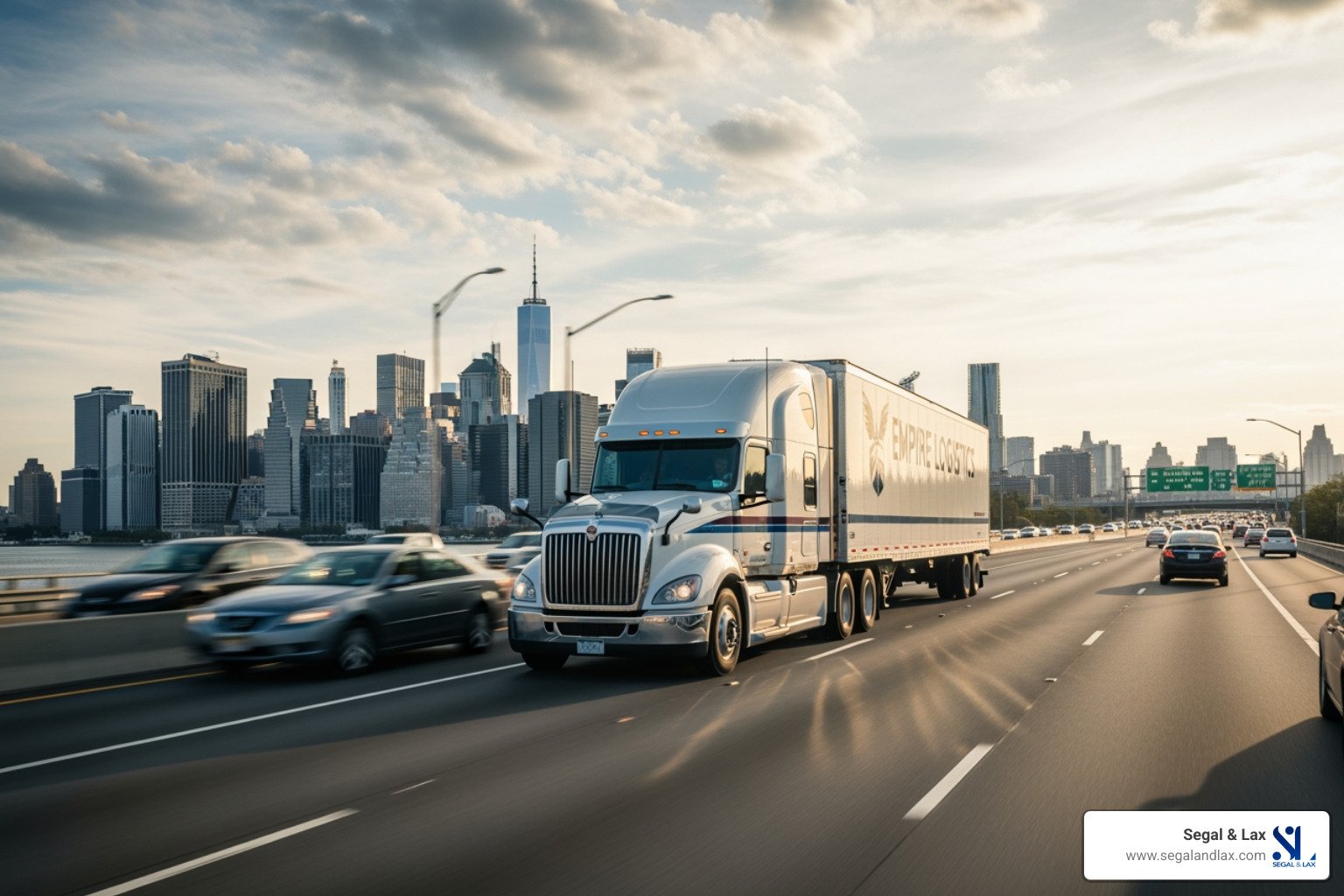
Commercial Truck Crash 2022: Alarming Dangers
Why a Commercial Truck Crash in New York Poses a Serious Threat
A commercial truck crash is more than a traffic accident—it’s a devastating event. When a vehicle weighing up to 80,000 pounds collides with a passenger car, the physics are unforgiving. The sheer size and weight difference means those in smaller vehicles often face catastrophic consequences.
Key 2022 Facts About Commercial Truck Crashes:
- 5,936 people died nationwide, a 2% increase from 2021.
- 70% of fatalities were occupants of other vehicles.
- 76% of fatal crashes occurred on weekdays.
- 27% occurred on Interstate highways, including those in New York.
- 160,608 people were injured in these crashes.
The statistics reveal a troubling reality: commercial truck crashes are a persistent and growing danger. In New York City, trucks are involved in a disproportionate number of fatal crashes relative to their presence on the road.
Understanding the causes—from driver fatigue and company negligence to vehicle failure—is crucial for anyone sharing the road with these massive vehicles. It’s also essential knowledge for victims and their families seeking justice.
I’m Mark Segal. For decades, I’ve represented New Yorkers injured in commercial truck crashes, navigating the complex federal regulations and corporate liability these cases demand. Our firm understands that behind every statistic is a person whose life has been turned upside down, and we’re committed to fighting for the compensation they deserve.
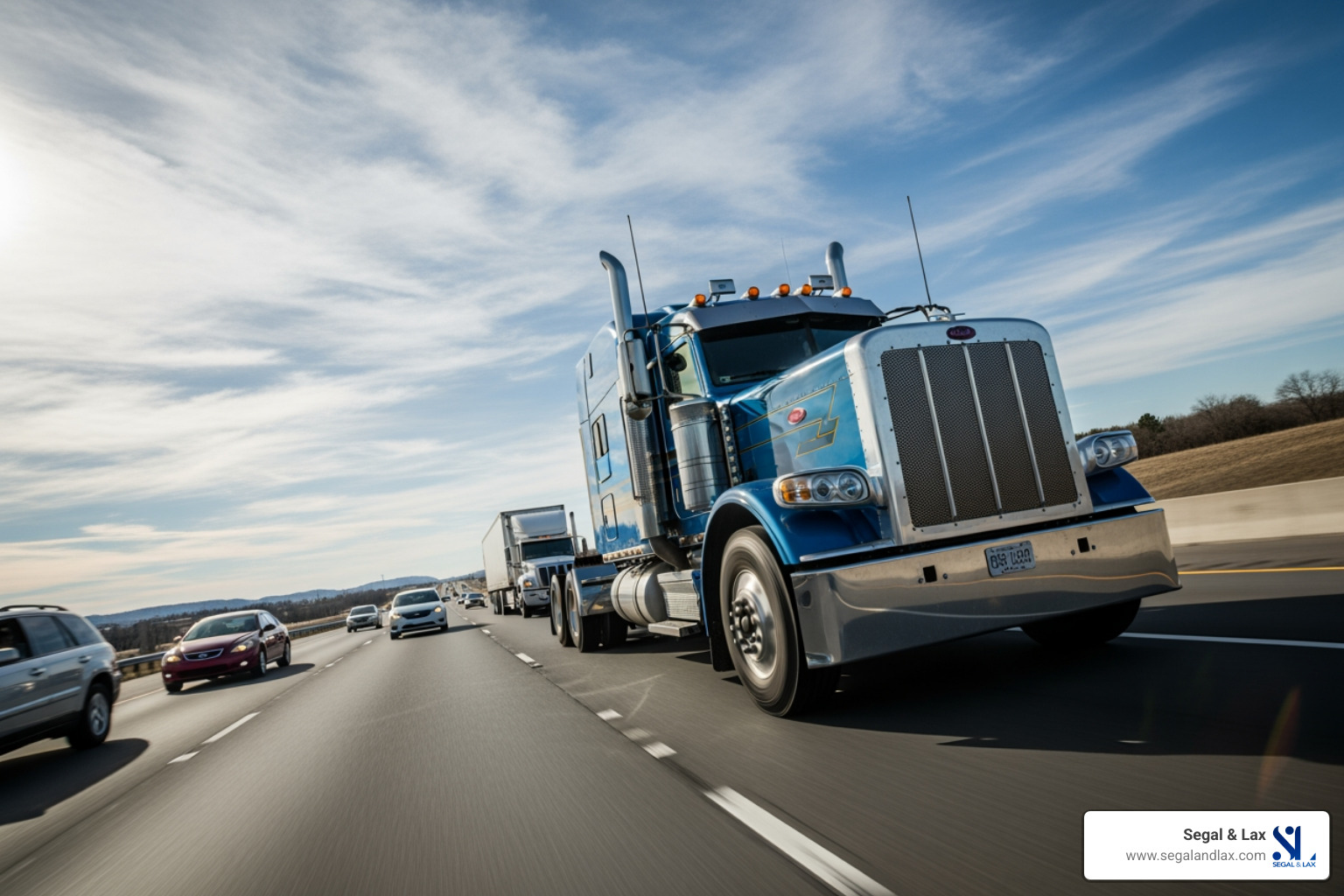
The Sobering Statistics: A Look at Recent Truck Crash Trends
The numbers don’t lie: roads in New York and across the nation are seeing a concerning rise in accidents involving large commercial vehicles. The latest data reveals just how prevalent and impactful a commercial truck crash can be.
According to the National Highway Traffic Safety Administration (NHTSA), 2022 was a grim year, with a 2% increase in fatalities from the previous year. This upward trend represents a growing danger on our highways and city streets.
The most difficult part of these statistics is who bears the brunt of these collisions. A staggering 70% of people killed in large-truck crashes were occupants of other vehicles. The vulnerability of a passenger car against an 80,000-pound truck is undeniable. While truck drivers accounted for 18% of fatalities, it is most often the people in smaller cars, motorcyclists, and pedestrians who face catastrophic consequences.
The data also shows that 76% of fatal crashes occurred on weekdays, aligning with peak commercial activity. While you might think busy centers like New York City are the only hotspots, national data shows that 54% of fatal crashes occurred in rural areas, where emergency response can be slower. Still, major arteries remain dangerous, with 27% of fatal crashes happening on Interstates—routes that crisscross New York. These national trends resonate with what we see on our state’s diverse roadways.
For a deeper look at these figures, the Large Truck and Bus Crash Facts 2022 report offers comprehensive details. These aren’t just numbers; they represent real lives forever changed by a commercial truck crash.
Why They Happen: Primary Causes of a Commercial Truck Crash
When you’re driving on the Brooklyn-Queens Expressway or sharing I-87 with commercial trucks, you might wonder what could cause such a massive vehicle to lose control. A commercial truck crash rarely results from a single cause. These accidents typically stem from a combination of human error, mechanical failures, and environmental factors.
Driver-Related Factors: The Human Element
People, no matter how well-trained, can make mistakes—especially when tired, distracted, or under pressure. Driver fatigue is one of the most dangerous problems. The pressure to meet tight delivery deadlines leads some drivers to push past federal Hours-of-Service (HOS) regulations, slowing their reaction time and impairing judgment. Investigations by the National Transportation Safety Board have found driver fatigue to be the probable cause in many fatal collisions.
Speeding and distracted driving are also common. In 2022, nearly 18% of truck drivers in fatal crashes had a prior speeding conviction. A quick glance at a phone means the truck travels the length of a football field with the driver’s eyes off the road. For more on this, read about driver distractions.
While less common, driving under the influence still occurs. Federal regulations hold commercial drivers to a stricter standard (.04 g/dL) than other motorists. Even small amounts of alcohol or drugs can impair the skills needed to operate an 18-wheeler. Our page on drunk driving accidents explores this issue further. Finally, inexperience plays a role, with over 20% of truck drivers in fatal crashes having a previously recorded crash, raising questions about company hiring practices.
Vehicle, Cargo, and Environmental Factors
Sometimes, the crash isn’t the driver’s fault but is due to the truck itself or the conditions. Poor vehicle maintenance is a recipe for disaster. Brake failures, tire blowouts, and steering problems can all turn a routine trip into a nightmare. Improperly loaded cargo can also cause a crash. An overloaded or unbalanced truck is harder to control and stop, and cargo falling onto a busy New York highway creates an immediate hazard. Finally, weather and road conditions like rain, ice, and fog reduce traction and visibility, while construction zones and potholes add another layer of danger. Our page on the causes of car accidents provides a comprehensive look at these factors.
The Role of the Trucking Company
The company that owns the truck often bears significant responsibility for a commercial truck crash. Corporate decisions made in boardrooms have direct consequences on New York’s roads. Common issues include:
- Pressure to meet deadlines: Unrealistic schedules can force drivers to speed, skip rest breaks, and drive while fatigued.
- Inadequate training and negligent hiring: Some companies fail to conduct proper background checks or rush drivers through training.
- Falsifying electronic logs: Electronic Logging Devices (ELDs) were created to track driver hours, but some companies create fictitious accounts to allow drivers to work beyond legal limits.
- Neglecting fleet maintenance: Delaying repairs and skipping inspections to save money gambles with public safety.
- A weak safety culture: When management doesn’t prioritize safety, that attitude filters down, making accidents inevitable. The Federal Motor Carrier Safety Administration Pocket Guide makes it clear that motor carriers are responsible for reducing crashes.
The Devastating Aftermath: Common Injuries and Crash Types
When a massive commercial truck collides with a smaller passenger vehicle in New York, the outcome is rarely minor. The disparity in size and weight creates a violent impact, leaving a high potential for catastrophic injuries and fatalities for those in the smaller car.
Types of Injuries from a Commercial Truck Crash
The extreme forces in a commercial truck crash can lead to a range of devastating injuries that change lives forever. These are often Catastrophic Injuries, causing long-term or permanent disability and requiring extensive medical care. Common examples include:
- Brain Injury: Ranging from concussions to severe traumatic brain injuries (TBIs) that affect thinking, memory, and personality.
- Spinal Cord Injury: Damage to the spinal cord that can result in partial or complete paralysis, requiring lifelong care.
- Burn Injuries: Occurring from ruptured fuel tanks or hazardous materials, these are incredibly painful and cause permanent scarring.
- Amputations: The crushing force of a truck can lead to the loss of limbs, causing profound physical and emotional trauma.
- Internal Injuries: Blunt force trauma can cause severe internal bleeding and organ damage that may not be immediately apparent but can be life-threatening.
- Wrongful Death: Tragically, many crashes result in fatalities, leaving families to face unimaginable grief and financial hardship.
Common Commercial Truck Crash Scenarios
Large commercial vehicles are involved in specific types of accidents on New York roads, each with its own dangers:
- Jackknife Accidents: The trailer swings out to form a sharp angle with the cab, often blocking multiple lanes and causing chain-reaction collisions.
- Rollover Crashes: Due to a high center of gravity, trucks can roll over if a driver speeds or takes a turn too fast, crushing nearby vehicles.
- Underride Accidents: A passenger car slides underneath the truck’s trailer, often with fatal consequences for the car’s occupants.
- T-bone Collisions: A truck smashes into the side of a smaller vehicle, which offers little protection against the impact.
- Rear-End Collisions: A heavy truck cannot stop in time and strikes the vehicle in front of it with destructive force.
- Lost Load Accidents: Improperly secured cargo falls onto the roadway, creating sudden obstacles that can cause multi-vehicle pile-ups.
Navigating the Complexities: Regulations, Liability, and Technology
After a commercial truck crash, the path to recovery involves understanding a complicated system of rules, responsibilities, and technologies. The trucking industry operates under strict oversight, yet devastating accidents still occur. Here’s what you need to know about the regulations, who is responsible, and how technology is changing truck safety.
Safety Regulations and Shared Responsibility
The Federal Motor Carrier Safety Administration (FMCSA) sets the rules for the commercial trucking industry to reduce crashes, injuries, and deaths. Key regulations include Hours-of-Service (HOS) limits to combat driver fatigue, Electronic Logging Devices (ELDs) to track driving time, and rigorous Commercial Driver’s License (CDL) requirements. The FMCSA also mandates strict drug and alcohol testing and vehicle inspection and maintenance standards. Despite these rules, violations are common, as shown by frequent citations for lighting and inspection failures noted in the Federal Motor Carrier Safety Administration Pocket Guide.
Keeping our roads safe requires accountability at every level.
| Entity | Primary Safety Responsibilities |
|---|---|
| Truck Drivers | Follow HOS rules, drive attentively, complete vehicle inspections, avoid speeding and impairment, and maintain a valid CDL. |
| Trucking Companies | Foster a safety culture, maintain vehicles, comply with ELD rules, train drivers, conduct background checks, and set realistic deadlines. |
| Regulatory Bodies (FMCSA) | Create and enforce safety regulations, conduct inspections and audits, investigate crashes, and provide data to improve industry safety. |
When any part of this system fails, the risk of a commercial truck crash increases dramatically.
Understanding the Legal and Financial Consequences of a Commercial Truck Crash
The financial impact of a serious truck accident can be overwhelming, with medical bills, lost wages, and long-term care costs potentially reaching millions. This is why determining legal responsibility is so critical.
Liability in a commercial truck crash is complex and often shared among multiple parties. The truck driver may be at fault, but so could the trucking company for negligent hiring, pressuring drivers to violate rules, or skipping maintenance. Other responsible parties can include cargo loaders who improperly secured freight or vehicle manufacturers if a defective part caused the failure. Our firm investigates to identify every party who played a role. Under New York’s comparative negligence rule, you can still recover compensation even if you are found partially at fault, though your award will be reduced by your percentage of fault.
Seeking compensation involves pursuing damages for all medical expenses (past and future), lost wages and earning capacity, and pain and suffering. In fatal cases, families can pursue wrongful death damages. Trucking companies and their insurers have lawyers working to minimize payouts. Having an advocate who knows the industry and their tactics is crucial. For guidance on what to do immediately after a crash, visit our page on After an Accident.
The Future of Truck Safety: Challenges and Advancements
Technology offers hope for reducing commercial truck crashes. Innovations like Automatic Emergency Braking (AEB), Lane Departure Warning, and Blind-Spot Detection can prevent accidents before they happen. Onboard video recorders provide invaluable evidence and help companies coach drivers on risky habits. Electronic Stability Control (ESC) helps prevent rollovers. The challenge is ensuring widespread adoption, as many of these features remain optional. As technology becomes more standard, we hope to see fewer devastating crashes on New York’s roads.
Frequently Asked Questions about New York Truck Accidents
After a commercial truck crash, victims and their families have urgent questions. Here are answers to some of the most common concerns we hear from New Yorkers navigating this overwhelming situation.
Who can be held liable after a truck crash in New York?
In a New York commercial truck crash, liability is often complex and may be shared. Potential at-fault parties include:
- The truck driver for actions like speeding, distracted driving, or fatigue.
- The trucking company for negligent hiring, poor training, pressure to violate safety rules, or inadequate vehicle maintenance.
- Cargo loaders if an improperly secured or overloaded truck became unstable.
- Vehicle or parts manufacturers if a defect caused the crash.
- Third-party maintenance providers for negligent repairs.
A thorough investigation is essential to identify all responsible parties and ensure you can access full compensation from all available sources.
What should I do immediately after an accident with a commercial truck?
The moments after a crash are chaotic. Taking the right steps can protect your health and your legal rights.
- Prioritize Safety: If you can, move to a safe location away from traffic and turn on your hazard lights.
- Call 911: Report the accident and request emergency medical services. A police report creates an official record of the crash.
- Seek Medical Attention: Get evaluated by paramedics or go to an emergency room, even if you feel fine. Some serious injuries have delayed symptoms, and a medical record is vital for your claim.
- Document the Scene: If it’s safe, take photos and videos of vehicle damage, skid marks, road conditions, and any visible injuries.
- Gather Information: Get the driver’s name, insurance, and trucking company information, along with the truck’s DOT number. Collect contact details from any witnesses.
- Do Not Admit Fault: Avoid apologizing or speculating about what happened. Anything you say can be used against you.
- Contact a Legal Representative: Trucking companies dispatch teams to protect their interests immediately. You need someone to protect yours. For more guidance, visit our page on After an Accident.
How is fault determined in a New York truck accident case?
Determining fault requires a methodical investigation of all evidence. This includes the police report, the driver’s Electronic Logging Device (ELD) data to check for Hours-of-Service violations, the truck’s “black box” event data recorder, and maintenance records. Witness statements provide independent perspectives. We often work with accident reconstruction analysts and other professionals to analyze the crash dynamics and establish exactly how the accident occurred.
New York uses a pure comparative negligence rule. This means you can still recover damages even if you are found partially at fault for the accident. Your compensation is simply reduced by your percentage of fault. An insurance company will try to shift as much blame as possible onto you, so our job is to build the strongest case to ensure fault is assessed accurately.
Conclusion
A commercial truck crash isn’t just another traffic accident—it’s often a catastrophic event that reshapes lives in an instant. Across New York’s busy streets and highways, from the avenues of Manhattan to the roads of Staten Island, Brooklyn, Queens, and the Bronx, these massive vehicles pose a significant risk. When something goes wrong, the consequences are profound.
We’ve explored the troubling causes, from exhausted drivers to companies that cut corners on safety, and the devastating injuries that result, such as traumatic brain injuries, spinal cord damage, and wrongful deaths. These are real outcomes that real people face through no fault of their own.
The aftermath of a commercial truck crash is impossibly complex. You’re dealing with physical pain, emotional trauma, and financial strain, all while facing insurance companies and trucking corporations that want to minimize what they owe you. That’s not a fair fight.
This is where we come in. At Segal & Lax, with over 75 years of combined experience, we represent New Yorkers hurt by negligence. We understand the trucking industry’s regulations, know how to investigate these crashes, and are committed to holding every responsible party accountable.
What matters most is you. That’s why we work on a contingency basis—you don’t pay us unless we recover compensation for you. If a commercial truck crash has turned your world upside down, you don’t have to face it alone. Contact us for a free consultation about your truck accident case. Let’s talk about how we can fight for the future you and your family deserve.